The Emerging Scholars Blog

From InterVarsity’s Emerging Scholars Network

Archive for the ‘bobby gross’ tag

Week in Review: What’s your story? How do you tell it?

without comments

What are you reading, watching, thinking about this week? As usual, here’s a few which have been on our mind. Let us know your thoughts on any/all of them. If you have items you’d like us to consider for the top five, add them in the comments or send them to Tom or Mike.

1. Inhabiting God’s story? Over the past several days Tom hosted Bobby Gross, National Director of InterVarsity’s Graduate & Faculty Ministry.  They had a number of conversations with faculty, pastors, and friends of InterVarsity Christian Fellowship.  As part of the visit, Bobby participated in an Ascension Day service at First Presbyterian Church, York, PA.  The gathering was in partnership with Hearts and Minds Bookstore.  One of Byron Borger’s recent blog posts related to the event, Living the Christian Year author Bobby Gross to speak here on Ascension Day (5/10/2010) commends several books on the topic. In another post Byron shares that the beginning of Living the Christian Year: Time to Inhabit the Story of God is worth the price of the book.   Here’s an excerpt he highlights:

“Most of us think of ourselves as ordinary people living quiet lives in unremarkable places. We are merely hobbits in our shires. But listen! We may not be caught up in dangerous drama like Frodo and his loyal companion, Sam, but we nonetheless live inside a big story, one that started long before our birth and that will go on long after our death, one that’s as wide as the universe and as old as eternity: the Story of God as centered in Jesus the Christ.

Our personal narratives take their fullest shape and deepest meaning in relation to God’s purposes for us and for the world. As Eugene Peterson puts it, “God is the larger context and plot in which our stories find themselves.” A very large context and very long plot indeed. — Living the Christian Year: Time to Inhabit the Story of God (5/11/2010)

2. Want to know Why Amish businesses don’t fail (Geoff Williams, CNN Money, 5/4/2010), then read Erik Wesner’s new book Success Made Simple: An Inside Look at Why Amish Businesses Thrive.  By-the-way, the 95% success rate Wesner uses is based upon a 2009 report by Elizabethtown College sociology professor Donald Kraybill, who has spoken for two Central PA Emerging Scholars Network events. HT:  Scot McKnight,  Business folks, what do you see here? (5/13/2010).

“studying several Amish settlements, Kraybill found failure rates ranging from 2.6% and 4.2%; interviews with loan officers, accountants and industry professions in other Amish regions yielded additional anecdotal evidence of closure rates significantly south of 10%.Compare that to the average five-year survival rate for new businesses across the United States, which hovers just under 50%. So what’s the secret?” — Why Amish businesses don’t fail (Geoff Williams, CNN Money, 5/4/2010)

3.  The New War Between Science and Religion (Mano Singham, The Chronicle Review, 5/9/2010) opens
Read the rest of this entry »

  • Facebook
  • Google Reader
  • Twitter
  • Delicious
  • LinkedIn
  • Google Bookmarks
  • Evernote
  • WordPress
  • Share/Bookmark

Written by Tom Grosh

May 14th, 2010 at 2:06 pm

Bobby Gross: Living the Christian Year

with 3 comments

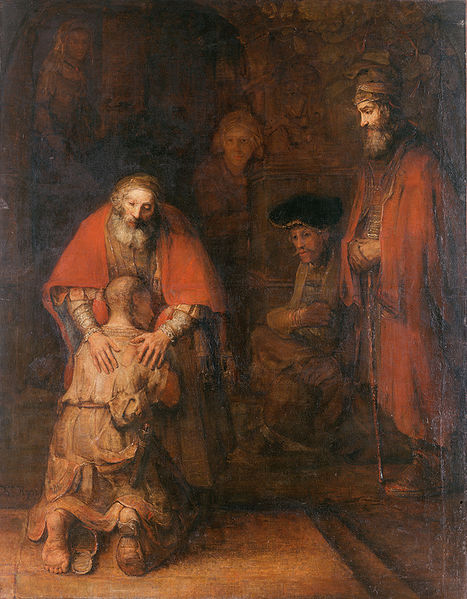
First Sunday in Advent in November 29

First Sunday in Advent in November 29

Here at the ESN blog, one of our main topics is spiritual formation in the academy: Christian practices like prayer and Bible study that shape us more and more into the image of Christ. The stress of Christmas may seem to be an unlikely time for spiritual growth, but for centuries, Christians have set aside the season of Advent as a time of spiritual preparation.

Last week, I interviewed Bobby Gross, recently appointed director of InterVarsity Graduate and Faculty Ministries about his new book, Living the Christian Year: Time to Inhabit the Story of God, to learn more about the meaning of Advent and how Christians in the academy could benefit from its observance. Bobby has served InterVarsity in many capacities: as a campus staff worker at the University of Florida, a staff supervisor in Florida, the Southeast, and New York/New Jersey, and, most recently, as a national field director based in Atlanta. You can download the introduction by Lauren Winner and the first chapter from IVP’s website.

Photo by Per Ola Wiberg via Flickr


Micheal Hickerson: How did you come to write a book about living out the Christian year? You’ve told me this wasn’t part of your background growing up.

Bobby Gross: I grew up in a Southern Baptist church and then worshipped in a variety of evangelical churches, but was never part of a church that was particularly liturgical or did anything with the Christian year. In my second year of marriage, my wife Charlene and I moved to Miami and we looked for a church together. She grew up Catholic, and we were wide open to any number of churches – we wanted our church to be smaller rather than larger, multiethnic, spiritually alive, Bible-centered. The church that caught our attention, from an ad in the paper, was a small Episcopal church. We went to visit, and it met all our criteria.

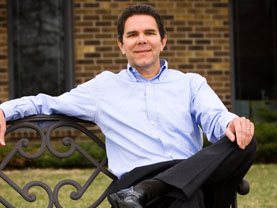
Bobby Gross, Director of InterVarsity Graduate & Faculty Ministries

Bobby Gross, Director of InterVarsity Graduate & Faculty Ministries

Charlene was immediately at home and more or less knew what to do in the service. I was lost for some months, really, but I stuck it out and slowly began to appreciate the beauty and the power of the liturgy as framing our weekly worship. Then, in the course of being in the Episcopal tradition, I learned about the Christian calendar and the way that liturgical rhythm, over the whole year, can give shape and meaning to our spiritual lives and reflections.

Working for a broadly evangelical organization, I found myself many times frustrated and saddened by the lack of awareness, even interest, of many churches and many Christians in this tradition and practice that goes back to within a few hundred years of Christ’s life. So I was motivated to write a book that could bridge from the liturgical world over to those who are not part of those kinds of churches. I wanted to make the bridge easy for evangelicals to walk across so that it would feel inviting and helpful to them.

MH: We have similar backgrounds. I grew up Southern Baptist as well and then worshipped at an Anglican church while I was in Canada for my master’s degree. Many people from Baptist or other non-liturgical backgrounds are often suspicious of adopting practices for which we don’t see direct Biblical connections. What are the benefits of observing the Christian year?

BG: First of all, let me point out the Biblical underpinnings for this practice. What’s striking in the Old Testament is that God himself, for his people, instituted a calendar with regular festivals, including pilgrimage. The Jewish year was oriented around certain festivals and certain points of remembrance. The most important, of course, was the remembering of the Exodus by celebrating the Passover. For Jesus, this was part of his life – the festivals, the pilgrimages, the Passover meal, as well as worship in the synagogue. Read the rest of this entry »

  • Facebook
  • Google Reader
  • Twitter
  • Delicious
  • LinkedIn
  • Google Bookmarks
  • Evernote
  • WordPress
  • Share/Bookmark

Written by Micheal Hickerson

November 23rd, 2009 at 11:58 am