
If you’ve seen this summer’s most discussed blockbuster, The Odyssey, perhaps you also saw the trailer for Digger. Tom Cruise plays the eponymous character, a titan of industry with the ear of the president and the means to (inadvertently?) cause an existential crisis. Towards the end of the promo, Digger asks a subordinate “Help me shape the story.” To the suggestion that “They already know the story,” Digger replies “They know the facts. The story is yet to be told.”
What a fitting overture to the themes of the feature presentation to follow. We know there were Greeks. We know it was reported that Alexander the Great visited the site in Turkey he understood to be the site of Troy and the final resting place of Achilles. We know some places Troy might have been, and some times and places where it wasn’t. The leaves a lot of room for Homer, Wolfgang Petersen, James Joyce, the Coen Brothers and others to weave narratives. In the latest film, Christopher Nolan certainly takes advantage of that flexibility to tell the ancient tale with modern sensibilities. Likely Homer, if indeed any such person existed, also made editorial choices reflecting contemporary concerns to craft a story for his present audience rather than a record of the past.
Whether that synergy of trailer and film was intentional or not, the relevance of Digger’s words to the contemporary world are almost certainly deliberate commentary. They are just as apt a prelude to, say, the national TV interview of the head of the Department of Health & Human Services spinning a yarn about the much more recent past that is all about narrative over facts. Parts of his tale are just at odds with reality, but on technical matters that are unfamiliar to most. Even I did not know the history of RSV off the top of my head; I wouldn’t expect many other folks to recall the timeline clearly enough to know why the virus could not have been the product of laboratory research.
Other narrative threads are at best selective in their relationship to facts. The burden of disease during the COVID-19 pandemic has not been distributed uniformly in space and time. It would not surprise me if one could produce evidence of specific hospitals that, at one point or another between March of 2020 and March of 2022, were not overwhelmed with gravely ill COVID-19 patients. (Obviously, the virus continues to circulate globally and cause serious illness and death; I’m choosing that time period because that’s when everyone’s lives were noticeably disrupted by mitigation measures and so probably constitute “the pandemic” to many.) Many folks went without first- or second-hand experience of how serious the illness could get. In my own extended family, no one wound up in the ICU because of it. That is not to minimize the suffering and loss that many others went through, or the burden our healthcare workers bore on our behalf. It is simply to acknowledge that personal experiences varied, which lends credence for some to Kennedy’s attempts at revisionist minimizing. If you don’t have access to all the information, how do you know that selective information which aligns with your experience is incomplete?
And what about selective information that provides the answers you want? I would hypothesize that many people who trust the current health secretary do so because the COVID-19 mitigations were difficult to endure and they don’t want to go through that again. And frankly, yes, they were challenging and carried their own cost. Being away from church, from school, from family gatherings and from all of the other interactions big and small that make us human and enrich our lives was detrimental. I don’t blame anyone for not wanting to relive all or any of that.
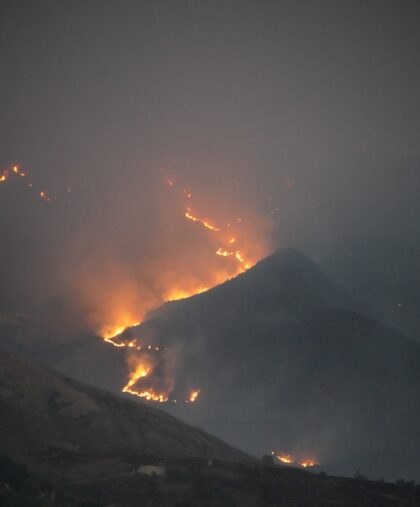
At the same time, we cannot rule the possibility of more diseases emerging in the future, perhaps ones that are even more contagious or more lethal. To make sure we are prepared, let’s focus on putting more and better tools into our toolkit instead of taking some out. For example, spread that fast and broad typically needs to be via the air, so let’s improve the air quality in our shared indoor spaces. We can increase the frequency that indoor air is exchanged with outdoor air. We can add filtration, something that will help with wildfire smoke as well. We can explore less conventional solutions like strategic placement of UV lights to see how effective they are.
Increased testing capacity would also help. A big reason we had to ask so many people to stay home everywhere early on was because we didn’t know where the virus was. For PCR tests, most of the testing components are essentially universal for all pathogens past, present and future. We can scale up the availability of the reusable machines and the chemical components that get used up with each test. The one part that is specific to the pathogen is called the primer, a short DNA molecule. Those can be made quickly with adequate infrastructure. Many East Asian countries took these steps after the first SARS outbreak and employed widespread testing effective this time around. We could even have PCR machines at home, with modular test cartridges for different viruses and bacteria. That tech already exists; you could have the machine now and get updated cartridges as needed. And it’s not too hard to imagine that we could further innovate at-home primer manufacturing, so that updating for the latest pathogen only requires downloading a file instead of shipping a cartridge.
And if we are innovating the process of making PCR primers, we’d almost certainly improve our ability to make mRNA vaccines; both involve generating specific nucleic acid strands. Obviously the safety and efficacy testing for a new vaccine would still need to be done. After that, however, we still had a big bottleneck in manufacturing and distribution. Maybe that means making your own vaccine doses at home, although that may raise other issues. But even if it just means faster and cheaper manufacturing, that would be a big help.
Sure, we’re veering into sci-fi territory a bit. But stories can shape our future as well as our past. So let’s tell stories where we get what we all want–minimal disruptions from communicable diseases–in a way that is consistent with the facts of how the world works.

Andy has worn many hats in his life. He knows this is a dreadfully clichéd notion, but since it is also literally true he uses it anyway. Among his current metaphorical hats: husband of one wife, father of two teenagers, reader of science fiction and science fact, enthusiast of contemporary symphonic music, and chief science officer. Previous metaphorical hats include: comp bio postdoc, molecular biology grad student, InterVarsity chapter president (that one came with a literal hat), music store clerk, house painter, and mosquito trapper. Among his more unique literal hats: British bobby, captain’s hats (of varying levels of authenticity) of several specific vessels, a deerstalker from 221B Baker St, and a railroad engineer’s cap. His monthly Science in Review is drawn from his weekly Science Corner posts — Wednesdays, 8am (Eastern) on the Emerging Scholars Network Blog. His book Faith across the Multiverse is available from Hendrickson.
Leave a Reply