Archive for the ‘Evangelicalism’ tag
Week in Review: Sleeping Edition
What are you reading, watching, thinking about this week? As usual, here’s a few which have been on our mind. Let us know your thoughts on any/all of them. If you have items you’d like us to consider for the top five, add them in the comments or send them to Tom or Mike.
1. Ever struggle with the The Morality of Sleep (The Chronicle of Higher Education. 8/11/2010)? Hope this research helps encourage the driven (including myself) to remember to take a day of rest, develop margin, and step into helpful habits/rhythms of life in order to be a blessing to those who the Lord brings along their path. A learning community which is committed to such a perspective provides a great context for mature relationships which bless others, without it the counter-cultural nature of seeking sleep/rest can cause conflict in and of itself.
2. Yale’s New ‘Jewish Lives’ Series seeks to address the provoking question of what it means to be Jewish. Why do the editors start the series with a biography of Sarah Bernhardt?
A: We launched with Bernhardt because her life raises so many powerful questions about what it means to be Jewish. Though she converted to Catholicism, she felt deeply identified as a Jew throughout her life. Then there is the sheer fascination of her life, especially through the eyes of Bob Gottlieb; and her enduring legacy as the greatest actress who ever lived. — Sarah Bernhardt Premieres in Yale’s New ‘Jewish Lives’ Series (The Chronicle of Higher Education. 8/11/2010).
3. Brainstorm: Justification by Faith: Michael Ruse is repelled by some Christian believers’ eager anticipation of a deathbed conversion from Christopher Hitchens, the cancer-stricken writer and atheist. (The Chronicle of Higher Education. 8/10/2010). Well worth a read, consideration, and response in your campus discussion group. Would love for someone to start a conversation on the article before I have opportunity to return to it.
Photo credit: Easter afternoon nap with sleep dog by Mark Stosberg via Flickr
More in Christians in the academy and some talk about poetry after the jump. Read the rest of this entry »
Week in Review: Future of Evangelicals Edition
What are you reading, watching, thinking about this week? As usual, here’s a few which have been on our mind. Let us know your thoughts on any/all of them. If you have items you’d like us to consider for the top five, add them in the comments or send them to Tom or Mike.
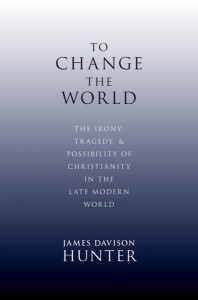
1. The Future of Evangelicals in Academia. Who else to address this question than Mark Noll, historian and author of The Scandal of the Evangelical Mind. Lots of good material in this interview, including some of his impressions of James Davison Hunter’s To Change The World and Andy Crouch’s review of the book. Note: If you have thoughts to share regarding the ideas in Hunter’s book, then please comment at Micheal Hickerson’s ESN blog post Changing the World with James Davison Hunter.
The last question of the interview is “What are some of the most encouraging trends you see today in evangelical intellectual circles, be they projects or institutions or ministries?” He mentions several projects, institutions, and ministries including InterVarsity’s Graduate and Faculty Ministry. Thank-you for the encouragement. To God be the glory!
2. Philosophy and Faith (Gary Gutting. NY Times Opinion. 9/1/2010.) Interested in studying philosophy at Notre Dame or tracking with some of the discussion which occurs on campus (and on-line) regarding material such as Alvin Plantinga’s modal-logic formulation of St. Anselm’s ontological argument or William Rowe’s complex version of a probabilistic argument from evil, then visit this NY Times Opinion piece.
3. Keeping up with the Amish? Just in case you haven’t seen one of the many articles on Amish growth, here’s a link to how it ran on NPR, APNewsBreak: Study Says Amish Expanding Westward (AP, 7/28/2010). Thank-you to Donald Kraybill for his focused research, for more visit Elizabethtown College Amish Studies. Read the rest of this entry »
Week in Review: No Christianity Please Edition
What are you reading, watching, thinking about this week? As usual, here’s a few which have been on our mind. Let us know your thoughts on any/all of them. If you have items you’d like us to consider for the top five, add them in the comments or send them to Tom or Mike.
1. No Christianity Please, We’re Academics: In Inside Higher Ed, Wheaton professor Timothy Larsen calls for universities and faculty to confront bias against Christians in higher education. Though there are some studies to back up his claims, he focuses on a couple of personal examples of bias and ignorance faced by himself and an undergraduate student.
[After getting a "F" for a paper defending traditional marriage,] John could never get better than a C for papers without any marked errors or corrections. When he asked for a reason why yet another grade was so poor he was told that it was inappropriate to quote C. S. Lewis in work for an English class because he was “a pastor.” (Lewis, of course, was actually an English professor at Cambridge University. Perhaps it was wrong to quote Lewis simply because he had said something recognizably Christian.) Eventually John complained to the department chair, who said curtly that he could do nothing until the course was over. John took this to mean that the chair would do nothing and just accepted the bad grade.
Larsen also cites some comments rejecting his proposal for a scholarly book of essays on T. S. Eliot’s Idea of a Christian Society, which largely focused on the truth/relevance of Christianity as a belief system, rather than the importance of Eliot’s book or the quality of the proposal.
As you might imagine, the comments on the article have gotten pretty heated.
2. How private will public higher education institutions become and how does that not only affect cost, but the vision for what receives attention on campus? Tom recently visited Penn State University — State College. He was once again impressed by the roar of this inspirational flagship campus, particularly in contrast to what is happening just to the north.
TWO things define the State University of New York. It’s huge. And compared to its public peers, it’s weird.
[Response]: “My belief is that to move an organization forward you have to have a common, comprehensive and ambitious agenda,” Dr. Zimpher said. “It has to be aspirational. It has to move you. I think the full manifestation of SUNY is underexposed and underexploited. If people really knew and understood the difference these campuses make in their communities they would be amazed.” …
“The strategic plan doesn’t talk about educational missions, it doesn’t talk about affordability or accessibility, there’s very little about undergraduate education and keeping it affordable and accessible,” said Phillip H. Smith, president of the powerful United University Professions union, which represents more than 34,000 academic and professional faculty members. “It reflects an attempt to corporatize the university.” — The Accidental Giant of Higher Education (Peter Applebome. NY Times. 7/19/2010)
PS. For more on the Public Higher Education Empowerment and Innovation Act, read Stop Raiding the Ivory Tower — a 7/27/2010 NY Times Op-Ed by Peter D. Salins (a former provost of the State University of New York, is a professor of political science at the State University at Stony Brook).
Are Christian Professors Politically Conservative?
On Friday, our week in review linked to Patricia Cohen’s article about political liberalism in the academy, “Professor is a Label That Leans to the Left.” The article was based on the work of sociologists Neil Gross (U. British Colombia) and Ethan Fosse (a PhD candidate at Harvard, where Gross worked until recently), who propose that academic liberalism is due to typecasting, similar to how nursing is considered a “woman’s job” by most Americans.
The academic profession “has acquired such a strong reputation for liberalism and secularism that over the last 35 years few politically or religiously conservative students, but many liberal and secular ones, have formed the aspiration to become professors,” they write in the paper, “Why Are Professors Liberal?” (PDF) That is especially true of their own field, sociology, which has become associated with “the study of race, class and gender inequality — a set of concerns especially important to liberals.”
Photo Credit: bbaltimore via Flickr
Week in Review: Big Questions Edition
Here’s the top five articles, books, websites, etc., that we’ve been reading or thinking about the past week. Let us know your thoughts on any/all of them. In addition, if you have items you’d like us to consider for the top five, add them in the comments or send them to Tom or Mike.
1. The Big Questions: Have our colleges and universities lost sight of their purpose? (Jerry Pattengale, Books & Culture, November/December 2009) critiques Education’s End: Why Our Colleges and Universities Have Given Up on the Meaning of Life (Anthony Kronman, Yale University Press, 2008) and recommends The American University in a Postsecular Age (Co-edited by Douglas & Rhonda Jacobsen, Oxford University Press, 2008).
2. Can a biologist trust an evangelical Christian? – InterVarsity Graduate & Faculty Ministry at Indiana University will be hosting this event next Thursday, Nov. 12.
This panel discussion features three evangelical scholars on the topic of Christianity, science and evolution. Our primary audience for this event will be scholars who are skeptical or even hostile about the idea of integrating religion and science. We have chosen the topic as part of the Indiana University “themester” on “Evolution, Diversity, and Change.” Our goals, at this point, are to provide a model of what it might look like to integrate belief in God with scientific inquiry; to put names and faces behind what can often be the demonized other (evangelical Christians); to foster a discussion about the integration of religion and science; to work at eroding the destructive binary that is assumed to exist between science and religion; and to work at building trust between the scientific community and evangelical Christianity.
For more information, check out their website, www.iugfm.blogspot.com.
3. Claude Lévi-Strauss Dies at 100 – One of the most important intellectual figures of the 20th Century died last Friday. From the NY Times’ obituary:
A powerful thinker, Mr. Lévi-Strauss was an avatar of “structuralism,” a school of thought in which universal “structures” were believed to underlie all human activity, giving shape to seemingly disparate cultures and creations. His work was a profound influence even on his critics, of whom there were many. There has been no comparable successor to him in France. And his writing — a mixture of the pedantic and the poetic, full of daring juxtapositions, intricate argument and elaborate metaphors — resembles little that had come before in anthropology.
Other reflections on his life and work: WSJ’s obituary and an elegy, NPR’s story about his 100th birthday, Eric Banks’ post at the Chronicle of Higher Ed about Lévi-Strauss’ importance.
Photo: Claude Levi-Strauss in 1992, from sagabardon via Flickr
4. In a NY Times Op-Ed entitled Teach Your Teachers Well, Susan Engel (a senior lecturer in psychology and the director of the teaching program at Williams College) builds upon Secretary of Education Arne Duncan’s Urging for ‘Revolutionary Change’ in Nation’s Teacher-Training Programs. How about this angle on the problem?
Our best universities have, paradoxically, typically looked down their noses at education, as if it were intellectually inferior. The result is that the strongest students are often in colleges that have no interest in education, while the most inspiring professors aren’t working with students who want to teach. This means that comparatively weaker students in less intellectually rigorous programs are the ones preparing to become teachers.
So the first step is to get the best colleges to throw themselves into the fray. If education was a good enough topic for Plato, John Dewey and William James, it should be good enough for 21st-century college professors. — Susan Engel, Teach Your Teachers Well, NY Times, 11/02/2009
5. Online Education, Growing Fast, Eyes the Truly ‘Big Time’ (Marc Perry, Chronicle of Higher Education, October 30, 2009) as The $50K Club: 58 Private Colleges Pass a Pricing Milestone (Reported by Scott Carlson, Kathryn Masterson, and Jeffrey Brainard, and written by Mr. Carlson. Chronicle of Higher Education. November 1, 2009). Looking for some thoughts on how liberal arts colleges and their ideals will survive the current economic crisis?
Traditional reasoning about the enrichment of the “student as future citizen” can only go so far when parents who pay the tuition or students taking the courses can’t see a bottom line in the form of a lucrative job after graduation. — Katharine S. Brooks, Close the Gap Between the Liberal Arts and Career Services, Chronicle of Higher Education, November 1, 2009
In Close the Gap Between the Liberal Arts and Career Services, Katharine S. Brooks, director of liberal-arts career services, University of Texas at Austin, offers some good ideas regarding career services. For parents, students, and educators she has a new book, You Majored in What? Mapping Your Path From Chaos to Career (Viking, 2009), which might be worth exploring. If you’ve read it, let us know what you think.
Evangelicalism’s First Rate Scholars
The glowing Chronicle of Higher Education review of Mark Noll’s God and Race in American Politics: A Short History, see Martin E. Marty’s God-Talk: Good, Bad, and Ugly, A new book on religion and race in politics should give us pause, places the recent Princeton University Press release on my American Religious Tradition shelf. I hope it does the same for you ;-)
In his review, Martin E. Marty briefly comments on evangelical scholars:
When I first began to write about religious history 50 years ago, fundamentalism, evangelicalism, and Pentecostalism were seen as fringe elements. As evangelicalism has since prospered, it has attracted first-rate scholars, many of them influential professors at first-rate universities and writers published by the most prestigious presses.
Provoking. Yes, to some degree evangelicalism has engaged what Noll termed The Scandal of the Evangelical Mind, i.e., the evangelical abandonment of higher education (and more broadly thinking) due to a lack of mature interaction with the intellectual conventions conventions of the modern university and an improper focus/application (or one might even say lack of appreciation) of God’s gift of the intellect as a community. May InterVarsity Christian Fellowship continue to intentionally dedicate and develop people, energy, conferencing (e.g., Following Christ 2008), and resources to take part in the revival of thinking God’s thoughts after Him. … to the praise of His glory and the advance of the Kingdom of God!
Question: When you read Marty’s quote, what first-rate evangelical scholars come to your mind as influential/inspirational in your field?
For myself, two scholars which immediately come to mind:
- Cal DeWitt, Professor, Nelson Institute for Environmental Studies, University of Wisconsin – Madison, from my undergrad biology studies. If you’re beginnning to have an interest in Creation Care, check out Earth Wise, Second Edition: A Biblical Response to Environmental Issues.
- George Marsden, Francis A. McAnaney Professor of History, University of Notre Dame, from my masters in higher education. Must read books include: The Soul of the American University From Protestant Establishment to Established Nonbelief and The Outrageous Idea of Christian Scholarship.