Archive for the ‘worship’ tag
Week in Review: Last Minute Shopping Edition
What are you reading, watching, thinking about this week? Anything special with some time off or is there too much going on with the holiday?
As usual, here’s a few which have been on our mind. Let us know your thoughts on any/all of them. In addition, if you have items you’d like us to consider for the top five, add them in the comments or send them to Tom or Mike.
1. In Star-Studded Wise Men: Rethinking the Christmas Story (December 7, 2009), Ben Witherington delivers a strong corrective regarding some popular renderings of Christmas. Ben has a similar post focused upon Luke 2:1-7, No Inn in the Room (December 09, 2007). (HT: Arlene)
2. More stocking stuffers? Stan Guthrie and John Wilson, Christmas Books, Part 3 (Podcast, posted 12/08/09). Forward the link to Buster Keaton’s College (1927) and have a laugh. Any additional suggestions you have for our Christmas Wish List?
3. Even more stocking stuffers! Don’t forget about the discounts you receive with your ESN membership from IVP, Eerdmans, Zondervan, and great periodicals. Books and subscriptions make great gifts (hint, hint).
4. This is a time of year when many interviews and job searches are conducted, so take a few minutes to read this good advice from David Perlmutter about “Avoiding a ‘Nuclear Veto’ in Hiring” from the Chronicle. Perhaps it will make next Christmas a bit merrier! (HT: Kim)
Books
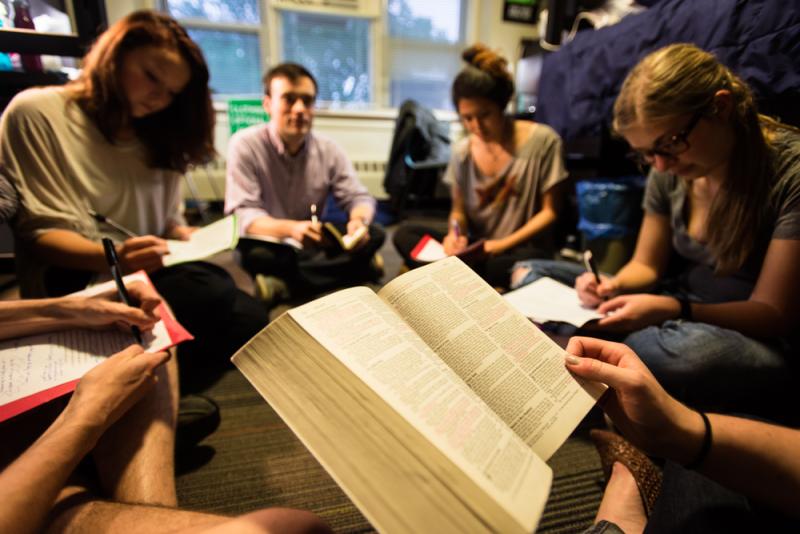
5. From Mike: Laura Vanderkam in the WSJ recently wrote “Seen and Not Heard in Church,” about the tension between the ideals of intergenerational worship and the messy realities of crying babies, restless toddlers, and bored children of all ages. May I recommend a couple of that my wife (who teaches music to very young children) has found helpful?
Parenting in the Pew (IVP) by long time IV staff, current John Brown U. faculty member, and Dead Theologian’s Society founder Robbie Castleman – a very practical, and compact, book on training your children to worship
Teaching Kids Authentic Worship (Baker) by Kathleen Chapman – a guide with 52 ideas for “worship moments,” in and out of church
Last Child in the Woods: Saving Our Children From Nature-Deficit Disorder (Algonquin) by Richard Louv – not about worship per se, but about children encounter reality around them – which, in a way, is what worship does, too
And there’s one more that I can’t find right now. You’ll just have to check back later today when I add it to the comments!
Your Mind Matters 4: Acting on Our Knowledge

Your Mind Matters
John Stott wraps up Your Mind Matters with “Acting on Our Knowledge.” He begins by pointing out that we avoid the swing from anti-intellectualism to hyper-intellectualism, by remembering “just one thing: God never intends knowledge to be an end in itself but always to be means to some other end.”
As a corollary to the mind and biblical knowledge being essential to the six spheres of Christian living, see Your Mind Matters 3: The Mind in Christian Life, Stott highlights the truth that:
“the acquisition of biblical knowledge must lead into these things [i.e., the six spheres] and enrich our experience of them. Knowledge carries with it the solemn responsibility to act on the knowledge we have, to translate our knowledge into appropriate behavior.”
As a result, we find knowledge leading to worship, faith, holiness, and love.
Knowledge is indispensable to Christian life and service. If we do not use the mind which God has given us, we condemn ourselves to spiritual superficiality and cut ourselves off from many of the riches of God’s grace. … What we need is not less knowledge but more knowledge, so long as we act upon it. …
How have you found knowledge leading to worship, faith, holiness, and/or love? Do you have particular illustrations in your own life and/or those of other followers of Christ (present or past) to share with the ESN community?
To inspire you, below’s a quote from A Priest Serving in Nature’s Temple: Robert Boyle’s Career Blended Faith, Doubt, and the Use of Science to Heal Disease and Fight Atheism.
As he [Robert Boyle, 1627-91] stated in A Disquisition about the Final Causes of Natural Things, he desired “that my Reader should not barely observe the Wisdom of God, but be in some measure Affectively Convinc’d of it.” There was no better way, in Boyle’s opinion, to “give us so great a wonder and veneration for it,” than “by Knowing and Considering the Admirable Contrivance of the Particular Productions of that Immense Wisdom,” by which he mainly meant the exquisitely fashioned parts of animals both great and small. Thereby, Boyle believed, “Men may be brought, upon the same account, both to acknowledge God, to admire Him, and to thank Him.” A pious and humble man, Boyle always sought to cultivate the same attitude in others. — Ted Davis Christian History 21(4) (November 2002): 28-31.
Note: For more visit the Robert Boyle Project and read Davis’ longer article Robert Boyle’s Religious Life, Attitudes, and Vocation Science & Christian Belief 19.2 (2007): 117-38. If you’re interested in my notes from Davis’ 6/29/2009 lecture on Robert Boyle’s Religious Life, Attitudes, and Vocation, drop me an email.