The Emerging Scholars Blog

From InterVarsity’s Emerging Scholars Network

Archive for the ‘Lenten synchroblog’ tag

Week in Review: Behold the Man Edition

without comments

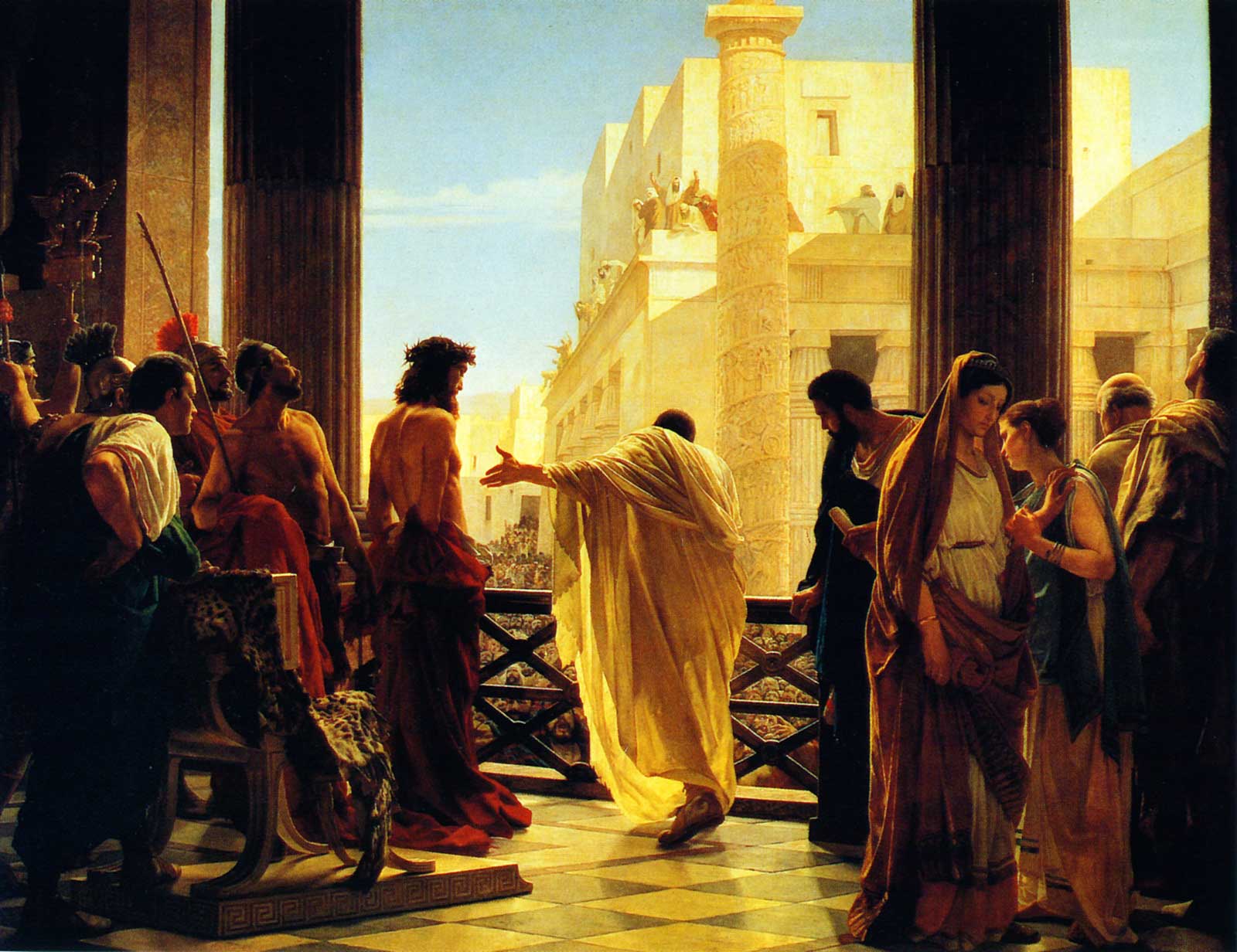
Antonio Ciseri's Ecce Homo

What are you reading, watching, thinking about this week? As usual, here’s a few which have been on our mind. Let us know your thoughts on any/all of them. If you have items you’d like us to consider for the top five, add them in the comments or send them to  Tom or Mike.

1. Christine Sine posted Godspace’s Complete Lenten Series for 2010, including material for Good Friday and Easter.  Thank-you to Christine for organizing this great resource for followers of Christ on their Lenten journey.

Photo: “Ecce Homo” (“Behold the Man”) by Antonio Ciseri (1821 – 1891), one of Mike’s favorite depictions of Good Friday. Click for a larger image.

2. Why So Few? (RJS, Jesus Creed, 4/1/2010):  “There are many reasons why women are underrepresented in a variety of fields – from ministry, theology, and evangelicals and the early church,, to science and engineering. While men and women often have different goals, values and abilities, these factors alone are not enough to account for the differences, or for the hurdles perceived by women who aspire to positions in these fields.” … Join the conversation.

3. For the other gender, check out “What Men Need” (Inside Higher Ed, March 31), a conversation with the presidents of the 4 remaining men-only four-year colleges: Wabash College, Hampden-Sydney College, St. John’s University (MN), and the historically black college, Morehouse. Rev. Richard Koopman, president of St. John’s, a Catholic university, addressed the need for spiritual development among men:

Father Koopmann described two groups he has led. One was largely of “unchurched” students, whom he found all needing to find ways to talk about difficulties they had faced in the past — such as childhood injuries or parental divorce. The other was of Catholic students, and Father Koopman said that there was more ritual with this group, such as his leading mass for these students. But in both groups, he said, “there was a need to build trust” so that the students could talk about the issues that troubled them — something they had difficulty doing.

Interestingly, Patrick White, president of Wabash and former president of Saint Mary’s, a women’s college, observed that both men and women seem more likely to engage deep intellectual topics when the opposite sex is absent.

4.  In the sciences?  Mark your calendar for the 65th Annual Meeting of the American Scientific Affiliation, The Catholic University of America, Washington, DC, July 30 – August 2, 2010. The topic will be Science, Faith, and Public Policy.  Check out the slide show here.

5. It’s Friday, But Sunday’s Coming: Need some Good Friday inspiration? Tony Campolo’s signature sermon about surrendering to Christ – and changing the world – can be streamed or downloaded from Campolo’s website. (HT: Susan Isaacs via Twitter – Isaacs is also the author of the “snarky but authentic” spiritual memoir, Angry Conversations with God)

Books:

Tom currently can’t put down Brian Godawa’s Word Pictures: Knowing God Through Story & Imagination (InterVarsity Press, 2009).  What’s the main point of Word Pictures?

The Bible is not a systematic theology of abstract propositions or a treatise on doctrinal correctness. It is a collection of narratives, poetry, images and metaphors that convey God equally through rationality and imagination. If we want to know God more biblically, as well as be more persuasive to a postmodern world, we must embrace the power and mystery of imagination in our approach to and understanding of God. — Brian, Q&A Author Interview

Note:  Posts with material from Word Pictures coming … Let Tom know if you’re interested in discussing material from the book.
  • Facebook
  • Google Reader
  • Twitter
  • Delicious
  • LinkedIn
  • Google Bookmarks
  • Evernote
  • WordPress
  • Share/Bookmark

A Beautiful Summation of the Gospel

without comments

For your reflection in the midst of Holy Week and in the days which follow:

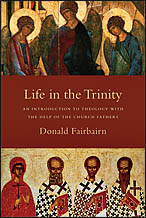
Life in the Trinity cover

God created us to share in this relationship (between the Father and the Son) and gave us a share in the communion of the Trinity at creation. This is the primary thing that we lost through the Fall. God’s promise after the Fall, around which one may organize the entire history and teaching of the Old Testament, was ultimately a promise that the Son of God would come to bring human beings back into a share in the communion of the Trinity. In fulfillment of this promise, God the Son personally entered human life by becoming man while remaining God, and in his human life he showed us both God’s love and perfect human love. At his crucifixion, God the Son bore in his own person our estrangement from God; as man he was crushed by our sin, and as man he was forsaken in our place by his own Father. Through his resurrection and ascension, he was restored as man to the fellowship of the Trinity which he had always shared as God, and in the process he opened the way for people who are united to him by faith to be restored to fellowship with the Trinity as well.  The Holy Spirit, whom the Father and the Son sent to earth, dwells in believers, uniting us to the Son and thus granting us the participation in the Father-Son relationship that became possible through Christ’s life, death and resurrection. Through the Spirit, Christian are called to live — both individually and as the church — so as to anticipate the time when God will transform the entire created world and bring his dwelling here to be with his people for eternity.

All of this implies that fundamentally, our task as Christians is not to aspire to some higher or better world, either though our own efforts or with God’s help. The effort we put into Christian life is not our attempt to achieve something we do not already have, because God has already given us a share in the Son’s relationship to the Father. We are already daughters and sons of God, and we are called to live like sons and daughters by reflecting the relationship of the true Son to his Father. Furthermore, the better world is not some other world than this, but it will be this world itself once God transforms it by removing the effects of sin, restoring it to its pristine glory and even bringing his own dwelling place down into it. As a result, this is where human life ultimately finds its significance. The way life is meant to be is tied to four great realities: who God is as Trinity of loving persons, how God created the world and humanity within it, how God has redeemed fallen humanity, and how God will transform the world and the lives of his adopted children in eternity. Christian life looks up to the Father-Son relationship, back to both creation and redemption, and ahead to the culmination of history, and this web of participation, reflection and anticipation provides the context in which we understand the details of Christian life and recognize their significance. Life as God has always had it, and life as it was meant to be for people, will one day become life as it is for believers. We are called to participate in, reflect and anticipate that life.” — Donald Fairburn, Life in the Trinity: An Introduction to Theology with the Help of the Church Fathers (Downers Grove: InterVarsity Press, 2009), 232-233.

PS. The quote concludes Life in the Trinity, for material earlier in the book visit Google Preview.  Hope you’ll join me in reading the whole book!  HT: Dan and Miller.

  • Facebook
  • Google Reader
  • Twitter
  • Delicious
  • LinkedIn
  • Google Bookmarks
  • Evernote
  • WordPress
  • Share/Bookmark

Written by Tom Grosh

March 31st, 2010 at 7:00 am

Addressing Our Errors

with 5 comments

Yesterday, I had the opportunity to hear a professor/practitioner of family medicine share how to address errors in the medical profession.  Yes, the university hospital provides a unique environment for research, student-faculty-staff relationships, and connection with the world beyond the campus which it serves, but all members of the university community make mistakes (even sin).  Gasp!

As you journey through Lent, join me in meditating upon living out the Greatest Commandment by taking some time to

  • consider how loving your neighbor fits in relationship to being/following Jesus the Christ in one’s vocation/discipline.
  • acknowledge, confess, and release when/where/how you have fallen short … Note: we are not perfect.   We will err at times in our inter-personal interactions, spelling, presentations, research, articles, web posts/comments, patient care, advice, etc.  But when we purposefully hide mistakes to our own benefit, point fingers at others to avoid the consequences, or turn frustration with our self into agitation with others, we encounter sin and the evil one coming forth to destroy all it can.
  • seek reconciliation in broken relationships.
  • be intentional about blessing those whom you’ve been called to serve through the resurrection power of Jesus the Christ.

Would enjoy reading some comments from those outside of the Medical profession as to how you might translate these thoughts from a Medical professor to your place in higher education (Note: the below section is just an excerpt from a larger presentation which included much more material).  Also would you have any resources to recommend in addressing mistakes and/or offering apologies?  From those within the Medical profession, any points to add?

When we are at risk of committing errors

  • Tired:  know your limits
  • Under the influence (eg., alcohol, drugs, over the counter drugs)
  • Competing demands
    • Work stresses
    • Family stresses (Note to those married:  open communication between family members is very important)
  • Practicing outside the usual scope of practice/expertise or attempting a procedure after it’s been awhile since one’s regular practice of it Read the rest of this entry »
  • Facebook
  • Google Reader
  • Twitter
  • Delicious
  • LinkedIn
  • Google Bookmarks
  • Evernote
  • WordPress
  • Share/Bookmark

Written by Tom Grosh

February 24th, 2010 at 12:05 pm

Week in Review: Christo et Ecclesiae Edition

with one comment

What are you reading, watching, thinking about this week? As usual, here’s a few which have been on our mind. Let us know your thoughts on any/all of them. If you have items you’d like us to consider for the top five, add them in the comments or send them to Tom or Mike.

1. Why Harvard Students Should Study More Religion (Lisa Miller, Newsweek): A look at Harvard’s (lack of) religion in its undergraduate curriculum, with special attention to Louis Menand’s attempt to include a course called “Reason and Faith” in Harvard’s revised education requirements. The article quotes a couple of very interesting, and very different, points of view;

“My colleagues fear that taking religion seriously would undermine everything a great university stands for,” the Rev. Peter Gomes, Harvard’s chaplain and a professor of Christian history, told me. “I think that’s ungrounded, but there it is.”Steven Pinker says his main objection to the 2006 proposal that students be required to take a course in a Reason and Faith category was that it seemed to make reason and faith equal paths to truth. “I very, very, very much do not want to go on the record as suggesting that people should not know about religion,” he told me. “But reason and faith are not yin and yang. Faith is a phenomenon. Reason is what the university should be in the business of fostering.”

2. More religion in higher education: Inside Higher Ed featured two opinion articles about the role of religion and theology in academic disciplines – “On Teaching Christianity” by Adam Kosko, who argues that religion classes need to spend more time studying the actual theology of religious figures and movements; and “Everywhere and Nowhere” by Kevin Schultz and Paul Harvey, which takes another look at the place of religion within historical studies.

More links after the jump.

Read the rest of this entry »

  • Facebook
  • Google Reader
  • Twitter
  • Delicious
  • LinkedIn
  • Google Bookmarks
  • Evernote
  • WordPress
  • Share/Bookmark

Written by Micheal Hickerson

February 19th, 2010 at 9:00 am

What are you picking up this Lent?

with 6 comments

Last night our family discussed the shared practice of Lent.

By the grace of God the Father, our family will pick up the Spirit’s patience, keeping before us Galatians 5:22-26 as we grow in Christ-likeness in word and deed:

But the fruit of the Spirit is love, joy, peace, patience, kindness, goodness, faithfulness, gentleness and self-control. Against such things there is no law. Those who belong to Christ Jesus have crucified the sinful nature with its passions and desires.  Since we live by the Spirit, let us keep in step with the Spirit.

We resolved by the power of the Spirit to give up human impatience, which became all too noticeable while being cooped up during the recent Northeast blizzard.  At the end of our discussion, one of my daughters suggested we really give up something earthly such as the internet.  My response was that we could consider the possibility, but first we’ll see how well we do with growing in and confessing when we fall short of incarnating God’s patience (and other fruits of the Spirit) in our life together over the course of the next week.

What are you picking up during Lent to fill the vacuum of what you’re giving up?  Is there a fruit of the Spirit which you yearn for and find difficult to nurture in the context of the academy? How can we pray for you and for the people of God in higher education as we journey toward becoming new creations through the resurrection power of Christ Jesus?

PS.  Looking for some prayers to guide your conversation with God today and through Lent?  Join me at Godspace.  Have some Lenten resources to share with ESN?  Please let us know by email or comment.

  • Facebook
  • Google Reader
  • Twitter
  • Delicious
  • LinkedIn
  • Google Bookmarks
  • Evernote
  • WordPress
  • Share/Bookmark

Written by Tom Grosh

February 17th, 2010 at 8:00 am

Reflecting on Ash Wednesday

with one comment

Do Lenten practices or conversations regarding them give you the feeling that Big Brother is Watching, like this location system being used at Carnegie Mellon University?

OR does our Lenten journey point to and live in the reality of the preciousness of Christ’s blood: Read the rest of this entry »

  • Facebook
  • Google Reader
  • Twitter
  • Delicious
  • LinkedIn
  • Google Bookmarks
  • Evernote
  • WordPress
  • Share/Bookmark

Written by Tom Grosh

February 26th, 2009 at 8:34 pm

Preparing for the Lenten Journey

with 9 comments

Today’s Fastnaught Day in PA Dutch Country (referred to by other traditions/regions, some with much more enthusiastic traditions, as Fat Tuesday or Shrove Tuesday) and the celebration of it emphasizes stuffing our bodies with wants before entering the sacrificial lock down of the religious practice of Lent.   

By contrast I look at Lent from the radical, relational lens of seeking God the Father – one shared by the people of God throughout the Biblical story — finding its fulfillment in Jesus the Christ through His inauguration of the Kingdom of God, death, resurrection, ascension to Lordship, the gifting of the daily redemptive Presence of God through the Holy Spirit (which dwells within the Body of Christ by the grace of God the Father and the Son). … and the New Heavens and the New Earth.  To God be the glory!  Forgive me, I’ve gotten a little carried away.  Lent ends in Holy Week where we focus upon the final days of Jesus the Christ’s earthly ministry and his death/resurrection.

Christine Sine in What Is Lent Anyway? defines Lent as

a time for “confrontation with the false self” (Thomas Keating) when we reflect on the responses and behaviours we exhibit that are least Christ like and seek God’s help in rededicating ourselves to God and God’s purposes. This is a time for self-denial and fasting when we give up some of the comforts of our lives in order to make ourselves more available to God.

If you practice Lent, please take a few minutes to share some reflections regarding the Lenten journey, how the lessons learned (and life lived) apply to campus life/vocation, and recommended resources (on-line and/or in print) for the blog’s readership.  Read the rest of this entry »

  • Facebook
  • Google Reader
  • Twitter
  • Delicious
  • LinkedIn
  • Google Bookmarks
  • Evernote
  • WordPress
  • Share/Bookmark

Written by Tom Grosh

February 24th, 2009 at 8:03 am